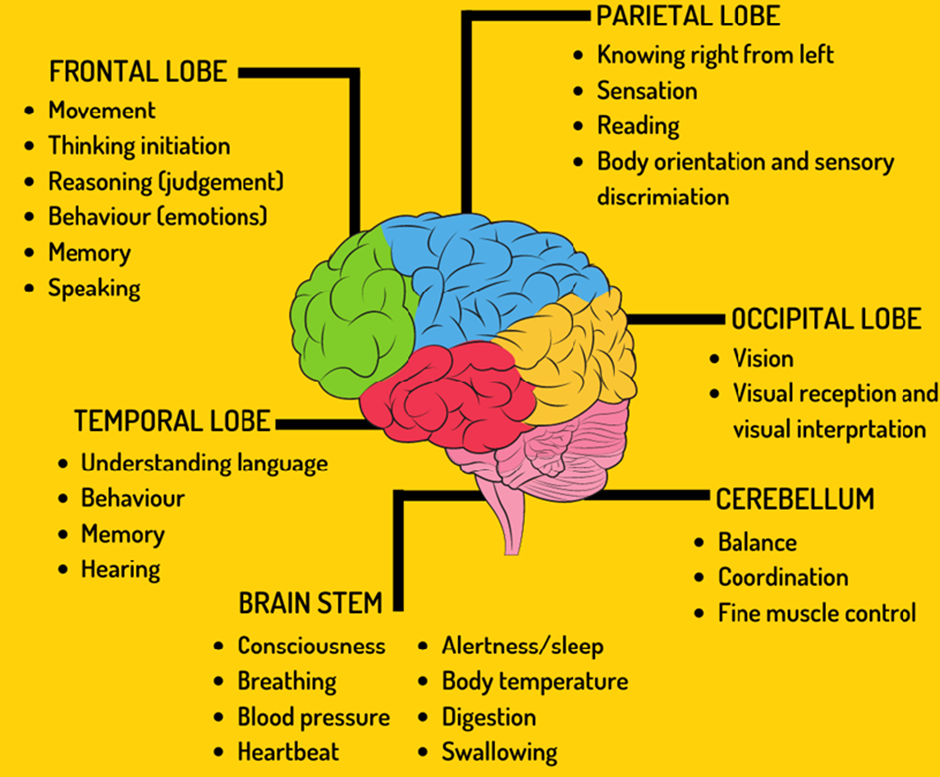
The brain is the control centre of the body, it manages everything we do, from breathing and moving to thinking and feeling. It's made up of about 86 billion neurons, which are specialized cells that send and receive information. The brain has different parts, each with specific jobs:
- Cerebrum:
The largest part which controls thinking, memory, speech, voluntary movements, and sensory processing (like seeing, hearing, touching).
- Cerebellum:
Located at the back, it manages balance, coordination, and fine motor skills (like writing).
- Brainstem:
Connects the brain to the spinal cord and controls basic life functions like heartbeat, breathing, and digestion involving things we don't have to think about.
- Limbic System:
Deep inside the brain, it handles emotions, motivation, and memory. key parts include the amygdala (emotion) and hippocampus (memory).
Each side of the brain (left and right hemisphere) also specializes:
- Left: Logical thinking, language, math.
- Right: Creativity, art, spatial abilities.
The brain is one of the most fascinating and mysterious things in the universe. Even though science has made huge progress in understanding it, there's still so much we don't know. Some of the biggest mysteries include:
- Consciousness: How do the electrical signals and chemical reactions in our brain create the feeling of being alive, aware, and "us"? We know where consciousness seems to be located, but how it happens is still a huge puzzle.
- Memory Storage: We have a general idea that memories are stored across neural networks, but the exact mechanism like how a specific memory is "written" and "read" is still not fully understood.
- Dreams: Why exactly do we dream? Some theories say dreams help process emotions or solve problems, but the real purpose and meaning behind dreams is still up for debate.
- Mental Illness: Disorders like depression, schizophrenia, and Alzheimer's have biological components, but we don't fully understand what flips the switch from a healthy brain to an unhealthy one.
- Brain Plasticity: The brain can rewire itself after injuries, sometimes in incredibly surprising ways. But the full potential and limits of this adaptability aren't completely mapped yet.
- The "gut-brain" connection: There's growing evidence that the bacteria in our stomachs can influence our mood, decisions, and even mental health but exactly how that communication happens is still mysterious.
- Dark matter of the brain: About 90% of the cells in the brain aren't neurons but glial cells. They were once thought to just be "support" cells, but now scientists think they might play major roles in how we think and live.
The brain communicates with the body through the nervous system using chemical and electrical signals. The human brain relies on a complex network of chemicals primarily neurotransmitters and hormones to regulate mood, behaviour, cognition, and bodily functions. Here's an overview of key brain chemicals and their roles:​
- Dopamine
Often called the "pleasure" or "reward" neurotransmitter, dopamine plays a central role in motivation, learning, and motor control. It is involved in the brain's reward system and is linked to feelings of pleasure and satisfaction. Imbalances in dopamine levels are associated with conditions such as Parkinson's disease (low dopamine) and schizophrenia (high dopamine).
2. Serotonin
This neurotransmitter helps regulate mood, appetite, sleep, and digestion. Low levels of serotonin are linked to depression and anxiety. Selective serotonin reuptake inhibitors (SSRIs) are commonly prescribed to increase serotonin levels in the brain.
3. Norepinephrine (Noradrenaline)
Norepinephrine is involved in the body's "fight or flight" response, increasing alertness and arousal. It also plays a role in mood regulation, and imbalances may contribute to depression and anxiety.
4. GABA (Gamma-Aminobutyric Acid)
GABA is the primary inhibitory neurotransmitter in the brain, helping to calm neural activity. It plays a role in reducing anxiety and promoting relaxation. Many sedative and anti-anxiety medications enhance GABA activity.
5. Glutamate
As the main excitatory neurotransmitter, glutamate is crucial for learning and memory. However, excessive glutamate activity can lead to excitotoxicity, potentially contributing to neurodegenerative diseases.
6. Acetylcholine
This neurotransmitter is essential for muscle activation and is involved in attention, learning, and memory. Acetylcholine deficits are associated with Alzheimer's disease.
7. Endorphins
Endorphins are natural painkillers produced by the brain. They help alleviate pain and induce feelings of pleasure or euphoria, often released during exercise or in response to stress.
8. Oxytocin
Known as the "love hormone," oxytocin is involved in social bonding, trust, and emotional connection. It plays a significant role in relationships and social interactions.
While neurotransmitters facilitate communication between neurons, hormones are chemical messengers released into the bloodstream, affecting various bodily functions, including mood:​
- Adrenaline (Epinephrine): Prepares the body for "fight or flight" responses, increasing heart rate and energy availability.​
- Cortisol: Known as the stress hormone, cortisol helps regulate metabolism and immune responses. Chronic high levels can lead to mood disorders.​
- Melatonin: Regulates sleep-wake cycles. Disruptions in melatonin production can affect mood and sleep patterns.​
An imbalance of chemicals in the brain can significantly affect mental health, mood, and behaviour. The brain relies on the neurotransmitters, a chemical messenger that transmit signals between nerve cells which regulate everything from emotions to sleep and concentration. When these chemicals are not present in the right amounts, it can lead to various psychological and neurological conditions. One of the most well-known examples is serotonin, which plays a key role in mood regulation. Low levels of serotonin are commonly linked to depression and anxiety disorders. Similarly, dopamine, which is involved in motivation, pleasure, and reward, can be out of balance in conditions such as Parkinson's disease and schizophrenia. In the case of Parkinson's, dopamine levels are too low, leading to movement difficulties. In contrast, excessive dopamine activity in certain areas of the brain has been associated with the hallucinations and delusions seen in schizophrenia.
Having a balanced chemical environment in the brain is crucial for both mental and physical health. In short, brain chemical balance is essential for maintaining emotional stability, focus, physical coordination, and overall well-being.
References:
- https://www.hopkinsmedicine.org/health/conditions-and-diseases/anatomy-of-the-brain accessed on 21st May 2025.
- https://www.verywellhealth.com/chemical-imbalance-5191365 accessed on 20th May 2025.
- https://my.clevelandclinic.org/health/articles/22464-hormones accessed on 20th May 2025.
4.https://www.discovermagazine.com/mind/10-unsolved-mysteries-of-the-brain accessed on 20th May 2025.
Prepared by:
AdilaMJ
Date of Input: 19/06/2025 | Updated: 19/06/2025 | hasniah
MEDIA SHARING