“Be careful walking under that tree, there are weaver ants!”
Since childhood, we have often been warned this way. Anyone who has ever been bitten by a weaver ant will surely never forget the sting of its bite. Once its mandibles clamp onto the skin, it will hold on stubbornly as if refusing to let go. It is as though they get furious whenever we are near their tree.
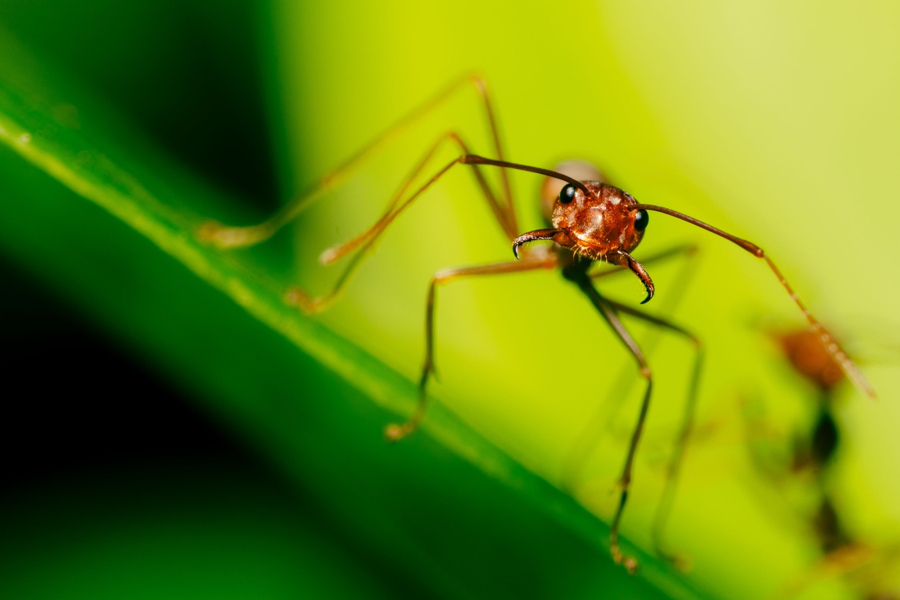
However, this fierce nature and highly aggressive behavior are not without reason. Behind that painful bite lies an extreme instinct of territoriality. For a colony of weaver ants, a single leaf, a twig, or even the entire tree canopy is a homeland that must not be disrupted. Anyone who steps into their empire, whether humans, birds, or simply any living creature, will be met with warnings and fearless attacks.
INTRODUCTION
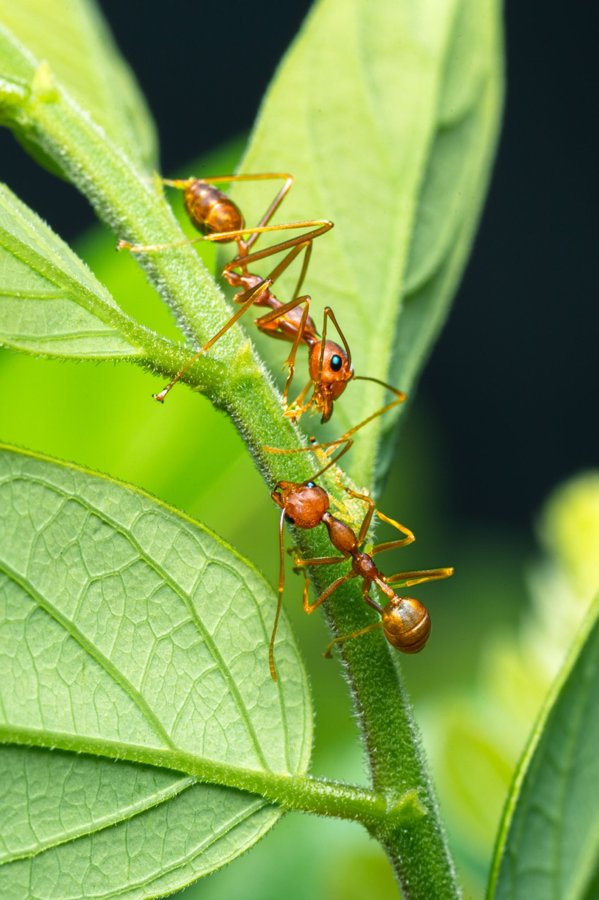
Weaver ants (Oecophylla smaragdina) are a species of tree-dwelling ants that act as a fiercely loyal defensive shield. They are the frontline guardians protecting their 'home' and host tree from any intrusion or threats by caterpillars and insect pests.
Why have weaver ants become the most aggressive tree guardians in nature, even though they aren't paid a salary?
SYMBIOTIC RELATIONSHIP
The tree provides a safe home by offering green leaves to the weaver ants. These leaves are carefully folded and stitched together to form nests. Additionally, the tree provides a steady supply of sweet nectar (extrafloral nectaries) as an energy source.
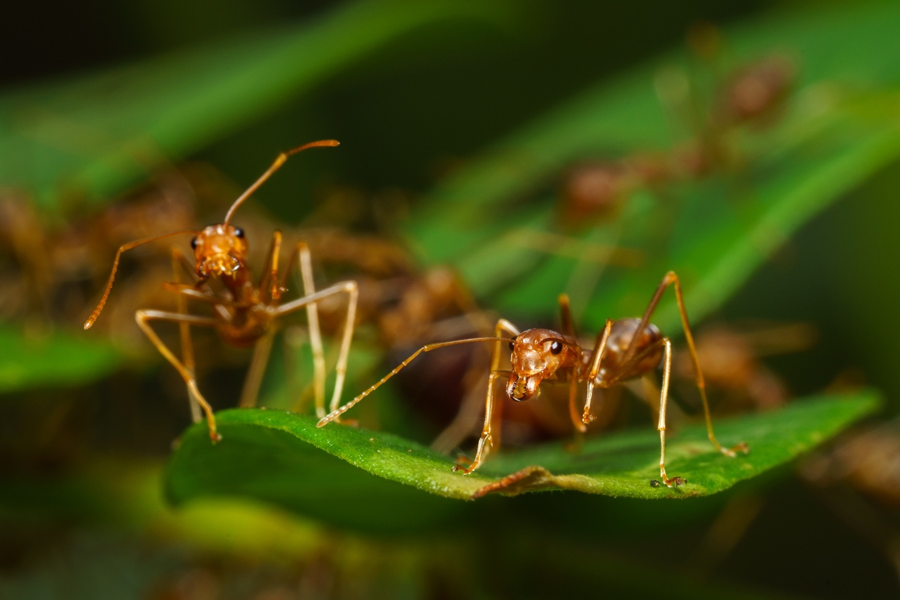
In return for this free housing and food, the weaver ants pay their 'rent' in the form of a 24-hour security service.
Through this symbiotic relationship, weaver ants conduct non-stop patrols to hunt down and drive away any potential pests, such as caterpillars, hairy caterpillars, and beetles, that could damage the tree's leaves. Their aggressive nature is not cruelty; rather, it is a manifestation of absolute loyalty within this symbiotic bond.
DEFENSE STRATEGY
Weaver ants do not attack intruders blindly or recklessly. Their defense strategy is built on three calculated steps:
- Scout Patrol:The initial stage begins with a single scout patrolling every branch. This scout isn't looking for a major fight; instead, it assesses the size and threat level of the intruder.
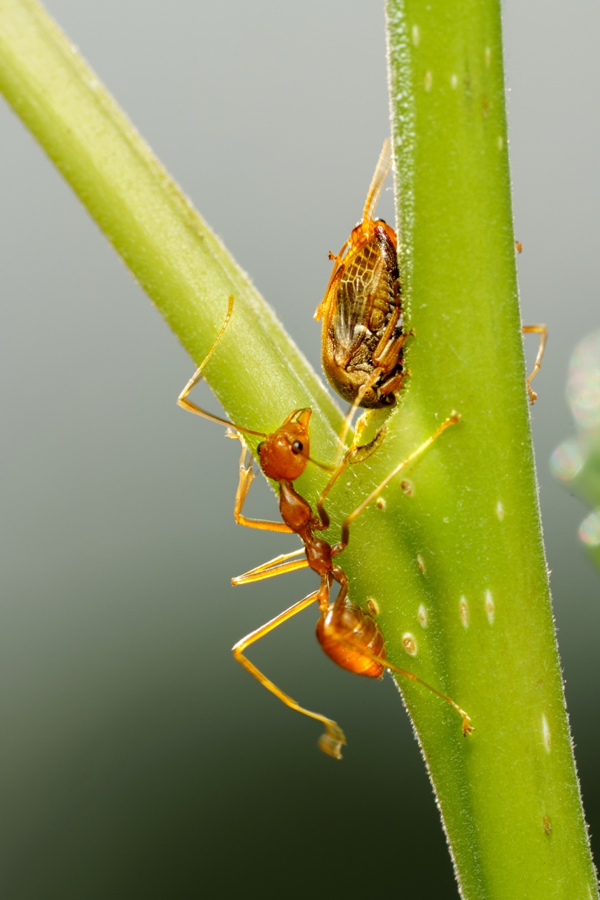
- Call for Reinforcements:If the scout encounters a threat too large to handle alone, or a food source that is too big (e.g., a large insect carcass), it secretes alarm pheromones (chemical signals) and rushes back to the nest to recruit help. Within minutes, tens or hundreds of other worker ants will swarm the location.
- Physics-based Immobilization:When reinforcements arrive, the primary goal is not to kill the prey immediately, especially since weaver ants do not possess venom or stingers to kill their prey. Instead, they prioritize immobilizing the prey's movement. They apply simple principles of physics, stretching the prey's limbs in various directions to neutralize its balance and ability to react.
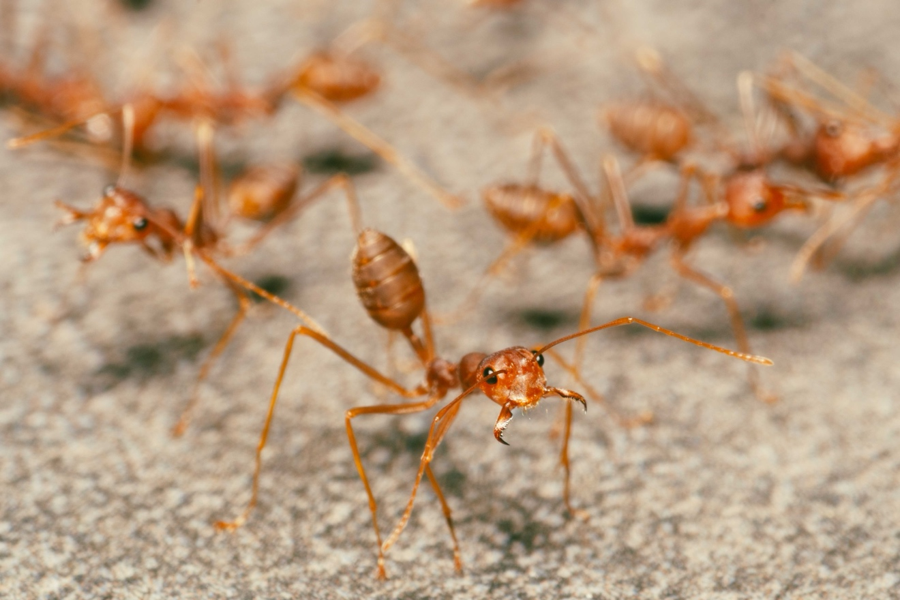
3. Physics-based Immobilization:When reinforcements arrive, the primary goal is not to kill the prey immediately, especially since weaver ants do not possess venom or stingers to kill their prey. Instead, they prioritize immobilizing the prey's movement. They apply simple principles of physics, stretching the prey's limbs in various directions to neutralize its balance and ability to react.
THE PHYSICS BEHIND A WEAVER ANT ATTACK
Situation 1: The Solo Scout
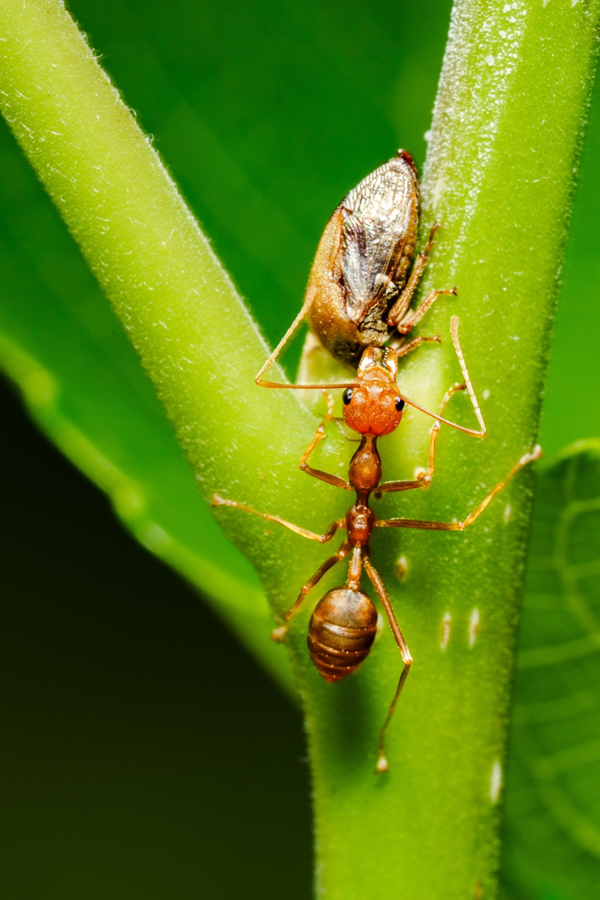
When dealing with small prey, a scout may not need to call for help, or may only require minimal assistance.
The scenario shows a weaver ant in the process of carrying a cicada exuvia (the skin left behind after molting). Due to its small size, the weaver ant can handle it alone without needing reinforcements.
Because the ant is climbing vertically up the tree trunk, it is working directly against gravity. To carry an object its own weight straight up a wall, pads on the ant's feet (called arolia) generate strong friction forces through microscopic suction and sticky secretions. For small prey, a single ant’s math is simple: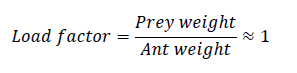
The size and weight of such a pest are roughly equal to the ant's own weight. The math is straightforward: 1 ant is enough for 1 small threat or load.
Situation 2: Weaver Ants and the Caterpillar
A caterpillar, though seemingly defenseless, poses a challenge due to its large size, making it difficult for the ants to defeat and transport back to the nest.
To overcome a caterpillar, more than one weaver ant is required. The physics application used here is very simple: static equilibrium).
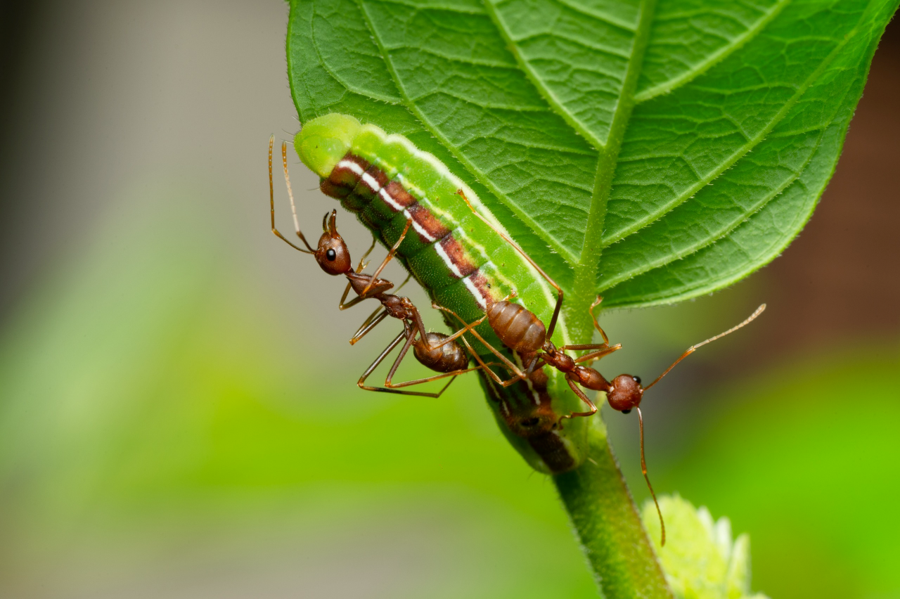
One weaver ant pulls upward, while another anchors itself to the leaf vein and pulls downward. They pull at an angle of nearly 180.
When two forces of equal magnitude pull directly in opposite directions, the total net force becomes zero  This creates static equilibrium, locking the caterpillar in place, rendering it unable to move, twist its body, or bite the leaf any further.
Situation 3: What's Important? Teamwork!
What if the threat is not only large, but also capable of threatening the safety of the weaver ants themselves?
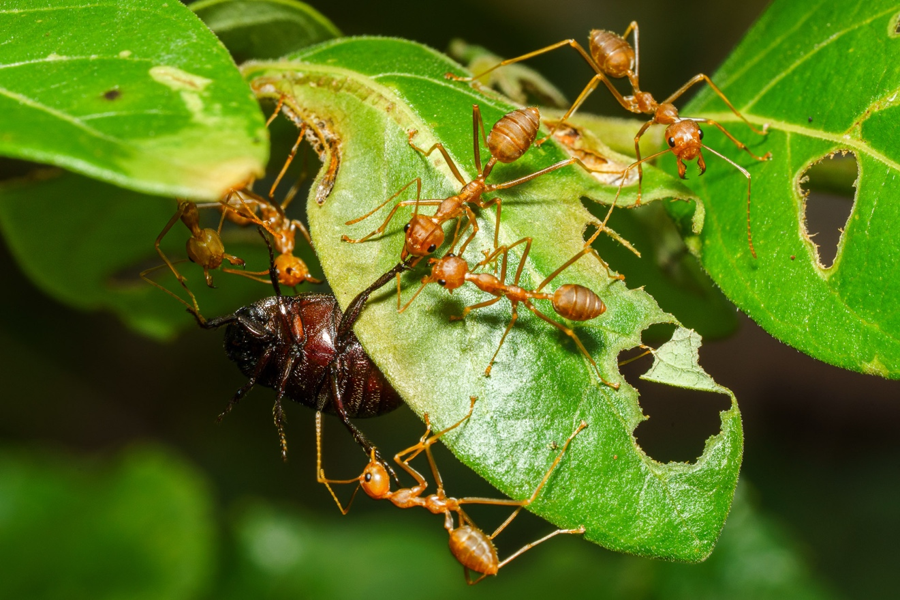
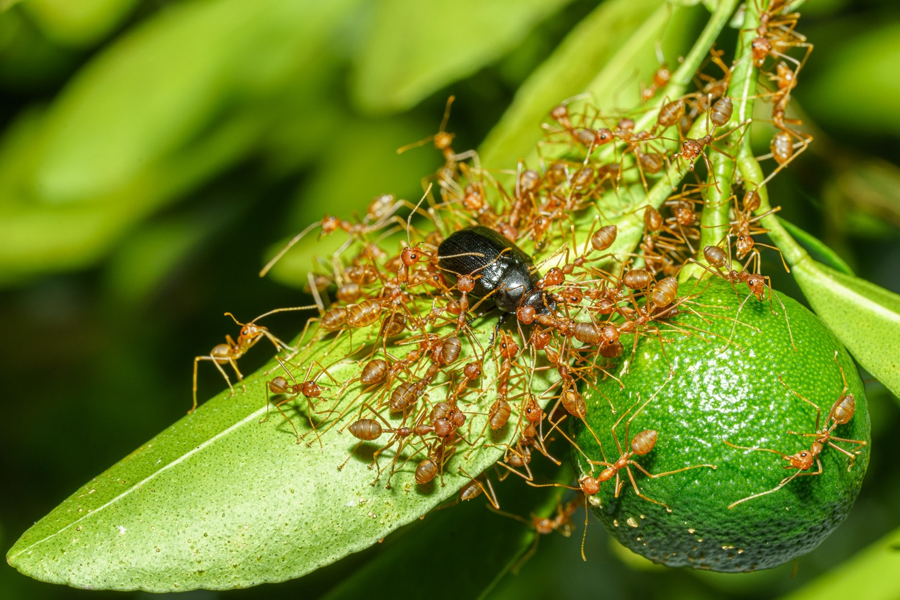
Take, for instance, a hard-shelled beetle intruding on the tree's territory. A beetle like this can weigh up to 100 times more than a single weaver ant (a 100:1 mass ratio) and possesses powerful wings and legs to kick off enemies.
If a single beetle generates a kicking force  a single ant on its own would certainly lose. However, when 6 weaver ants work together to hold and pull each of the beetle's legs in different directions,

By dividing the task into 6 parts, each ant only needs to handle a small fraction: around 17% of the beetle's total kicking force.
Additionally, they pull the beetle's legs radially outward. While this attack might look random, the ants are actually stretching all of the beetle's limbs outward away from its center of mass so that it loses leverage or torque. Without a firm footing on a surface (like a branch or leaf), the prey cannot generate the reactionary force needed to kick or break free.
CONCLUSION
The fierce nature of weaver ants that causes people to avoid them is not an aimless threat; rather, it is proof of a colony's dedication to preserving the symbiotic relationship with its host tree. Without expecting any financial reward, they act as a dedicated security team ready to defend the green canopy against invading enemies.
So, the next time you spot a weaver ant nest in your fruit tree, know that the tree is being carefully guarded against other pests that could threaten its well-being. Appreciate their hard work as a form of natural biological control that keeps your tree safe.
REFERENCES
- Way, M. J., & Khoo, K. C. (1992). Role of ants in pest management. Annual Review of Entomology, 37, 479–503.
https://doi.org/10.1146/annurev.en.37.010192.002403
- Czaczkes, T. J., & Ratnieks, F. L. W. (2013). Cooperative transport in ants (Hymenoptera: Formicidae) and elsewhere.Myrmecological News, 18, 1–11.
Author: Dr. Mohd Ezad Hafidz Hafidzuddin (Matematics Unit)
Reviewed by unit members on July 21, 2026.
Tarikh Input: 07/08/2026 | Kemaskini: 07/08/2026 | hasniah
PERKONGSIAN MEDIA