Imagine a computer so powerful it could solve problems in minutes that would take today’s fastest supercomputers thousands of years. That’s the promise of quantum computers—machines that use the strange, fascinating rules of quantum mechanics to process information in entirely new ways.
Unlike classical computers that use bits (0s and 1s), quantum computers use qubits. Qubits can be 0, 1, or both at the same time—thanks to a quantum property called superposition. Even more exciting, qubits can be entangled, meaning the state of one can depend on the state of another, no matter how far apart they are. This creates an exponential increase in computing power.
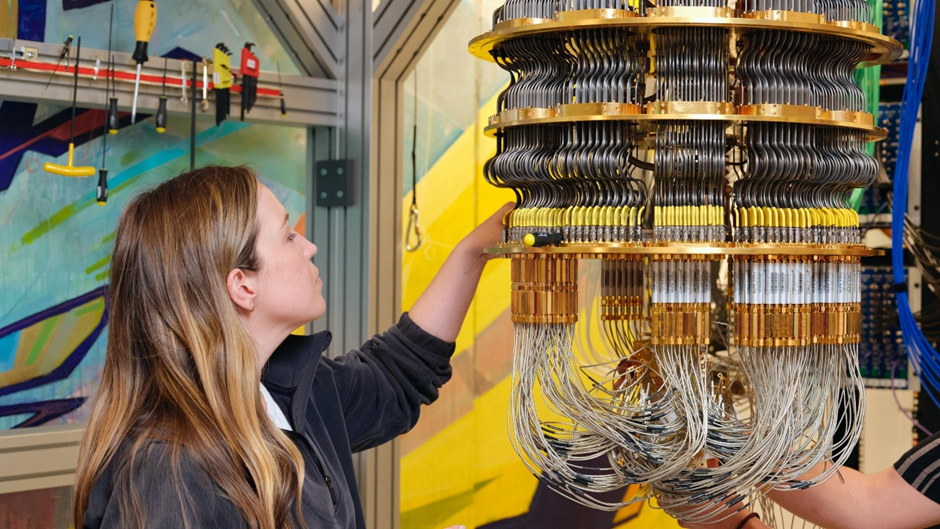
Why does this matter? Quantum computers could revolutionize fields like cryptography, drug discovery, and climate modeling. They might crack unbreakable codes or simulate complex molecules to design life-saving medicines. Google’s quantum computer, for example, claimed to solve a problem in 200 seconds that would take a classical computer 10,000 years.
But we’re not there yet. Quantum machines are delicate, expensive, and prone to errors from the tiniest vibrations or heat. Scientists are working hard on quantum error correction and better qubit stability to make these machines reliable.
Still, the quantum future is coming fast. Companies like IBM, Google, and startups around the world are racing to build practical quantum devices. It’s not just science fiction anymore—it’s the beginning of a new computing revolution, one where atoms and probability shape the digital world.
Author: Dr. Umair Abdul Halim
Physics Unit, ASPutra
Date of Input: 03/09/2025 | Updated: 03/09/2025 | emma
MEDIA SHARING