Protein and peptide therapeutics, such as insulin, monoclonal antibodies, and therapeutic enzymes, are essential for treating complex and chronic diseases. Still, the role of amino acid naming, which is key to patient safety, is often overlooked. How can a single-letter mistake or a subtle alteration in chemical structure have a massive impact on drug safety?
To understand this, we must look at how amino acids are designated by standard three-letter and one-letter codes (IUPAC-IUB Commission on Biochemical Nomenclature, 1984). Mixing up these systems or making typographical errors during digital sequencing can lead to catastrophic consequences in drug manufacturing (Brenner, 1999). For instance, accidentally swapping the adjacent QWERTY keys K (Lysine) and L (Leucine) in a sequence file can produce a defective protein with disrupted structural folding. Ultimately, if such a misengineered therapeutic protein reaches the market, it may fail to bind to its molecular target, rendering the treatment ineffective or triggering adverse toxic reactions (Hopkins & Groom, 2002).
Beyond digital typos, the challenge of isomerism poses another severe risk. While most human proteins consist of L-isomers, their right-handed mirror images, D-isomers, also exist. Omitting precise isomer specification on product labels can cause severe pharmaceutical complications, as mammalian enzymes are highly stereospecific to L-amino acids (JPT Peptide Technologies, 2024). Consequently, a therapeutic protein accidentally formulated with a D-isomer will resist enzymatic breakdown, drastically altering its half-life and bioactivity (Wikipedia, 2024). This metabolic resistance reduces drug efficacy and can trigger cellular toxicity, leading to liver strain or severe kidney damage due to the accumulation of non-metabolizable compounds (Med Sci Monit, 2026).
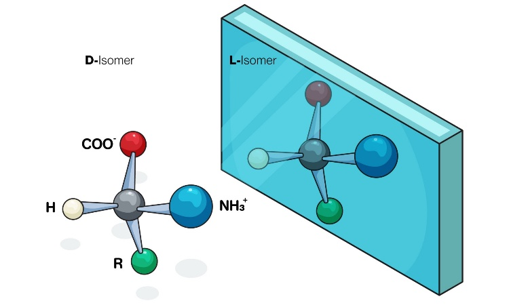
Figure 1: Spatial orientation differences between L-isomers and D-isomers.
(Source: VectorMine via Getty Images)
Furthermore, the human immune system is exceptionally sensitive to these subtle structural changes. Minor manufacturing nomenclature errors that alter peptide sequences can severely disrupt a drug's immunogenicity profile (Schellekens, 2002). An erroneous amino acid sequence can prompt T-cells and B-cells to recognize the altered site as a foreign threat (a neoepitope), triggering severe immune responses like acute anaphylactic shock. This process can induce the production of neutralizing antibodies that eliminate the therapeutic agent, thereby reducing the efficacy of subsequent treatments. Additionally, these antibodies may cross-react with and destroy the patient's healthy proteins, resulting in secondary autoimmune deficiencies (Casadevall et al., 2002).
These molecular risks are further compounded by the interconnected global pharmaceutical supply chain, which faces dangerous communication gaps due to discrepancies between localized corporate terminology and international standards like IUPAC and the WHO INN program (Loizides et al., 2021). Any ambiguity in amino acid naming during the transfer or translation of technical documents and labels drastically increases operational risks. Ultimately, these nomenclature gaps threaten quality management by introducing a high probability of material cross-contamination, incorrect chemical usage, and catastrophic quality control (QC) failures during active pharmaceutical ingredient (API) reception (Fellows et al., 2022).
In conclusion, drug safety extends beyond accurate clinical dosing and begins at the molecular level with rigorous documentation practices. Implementing a clear, consistent, and stringent amino acid nomenclature system is a fundamental safeguard for the safety and efficacy of modern biologic drugs. In the pharmaceutical industry, meticulous attention to amino acid naming and verification demonstrates a critical commitment to patient protection.
References
Brenner, S. E. (1999). Errors in genome annotation. Trends in Genetics, 15(4), 132–133. https://doi.org/10.1016/S0168-9525(99)01706-0
Casadevall, N., Nataf, J., Viron, B., Kolta, A., Kiladjian, J. J., Martin-Dupont, P., ... & Mayeux, P. (2002). Pure red-cell aplasia and anti-erythropoietin antibodies in patients treated with recombinant erythropoietin. New England Journal of Medicine, 346(7), 469–475. https://doi.org/10.1056/NEJMoa011931
Fellows, M., Friedli, T., Li, Y., Maguire, J., Rakala, N., Ritz, M., Bernasconi, M., Seiss, M., Stiber, N., Swatek, M., & Viehmann, A. (2022). Benchmarking the quality practices of global pharmaceutical manufacturing to advance supply chain resilience. The AAPS Journal, 24(6), Article 114. https://doi.org/10.1208/s12248-022-00761-7
Hopkins, A. L., & Groom, C. R. (2002). The druggable genome. Nature Reviews Drug Discovery, 1(9), 727–735. https://doi.org/10.1038/nrd892
IUPAC-IUB Joint Commission on Biochemical Nomenclature. (1984). Nomenclature and symbolism for amino acids and peptides: Recommendations 1983. European Journal of Biochemistry, 138(1), 9–37. https://doi.org/10.1111/j.1432-1033.1984.tb07877.x
JPT Peptide Technologies. (2024). What are L- and D- amino acids? JPT Peptide Blog. https://www.jpt.com/blog/l-and-d-amino-acids/
Loizides, U., Dominici, M., Manderson, T., Rizzi, M., Robertson, J. S., de Sousa Guimarães Koch, S., Timón, M., & Balocco, R. (2021). The harmonization of World Health Organization International Nonproprietary Names definitions for cell and cell-based gene therapy substances: When a name is not enough. Cytotherapy, 23(5), 357–366. https://doi.org/10.1016/j.jcyt.2021.02.114
Schellekens, H. (2002). Bioequivalence and the immunogenicity of therapeutic proteins. Nature Reviews Drug Discovery, 1(6), 457–462. https://doi.org/10.1038/nrd818
Sources and metabolism of D-amino acids and their roles as biomarkers in kidney disease: A review. (2026). Medical Science Monitor, 32, Article e950486. https://doi.org/10.12659/MSM.950486
Wikipedia contributors. (2024, July 13). D-peptide. Wikipedia, The Free Encyclopedia. https://en.wikipedia.org/wiki/D-peptide
SHAH CHRISTIRANI BINTI AZHAR, Ph.D
Pensyarah Kanan
Unit Kimia
Pusat Asasi Sains Universiti Putra Malaysia
Universiti Putra Malaysia
43400 UPM, Serdang,
Selangor
Date of Input: 14/07/2026 | Updated: 14/07/2026 | hasniah
MEDIA SHARING