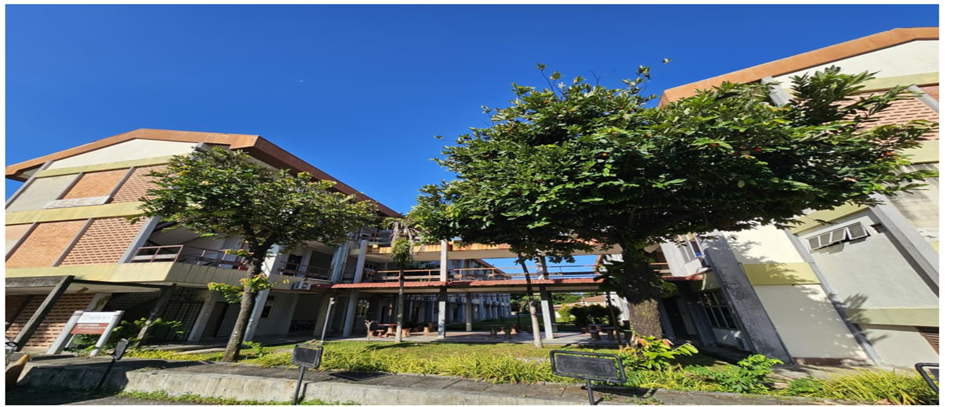
Figure 1: Velvet apple tree in front of Foundation Building 3 and 4
When visiting the Foundation 4 building at UPM’s Centre for Foundation Studies in Science, you will notice rows of trees bearing orange fruits. These are known as velvet apple trees (Diospyros blancoi). This tropical species is distinctive for its reddish-orange fruit covered with fine, velvety hairs. The name “butter fruit” comes from its soft, creamy flesh that resembles butter when eaten. Although less popular than other tropical fruits like mango or rambutan, the velvet apple holds significant scientific and nutritional value that many are unaware of.
LOCATION AND DISTRIBUTION
The velvet apple (D. blancoi) is believed to originate from the Philippines, where it is called Mabolo. It can also be found in parts of Southeast Asia, including Malaysia and Indonesia. The tree thrives in hot, humid climates with fertile soil and good drainage. In Malaysia, it is considered relatively rare, adding to its exotic appeal.
CULTIVATION
Velvet apple trees can be propagated through seeds or grafting. They require full sunlight and basic care such as regular watering and organic fertilization. The tree can grow up to 15–20 meters tall, with glossy green leaves that enhance its ornamental value. Although not demanding in maintenance, it takes several years to bear fruit. Commercial cultivation remains limited but shows potential as a niche crop with unique market value.
SCIENTIFIC ASPECTS
The velvet apple belongs to the family Ebenaceae, the same family as ebony trees. Its fruit is round, about 5–10 cm in diameter, with a velvety outer skin and creamy white-yellow flesh that has a distinct aroma. Nutritionally, it is rich in malic acid, vitamins B2 and B3, folic acid, calcium and zinc. It also contains active compounds such as flavonoids, triterpenes and diospyrin, which contribute to its health benefits.
Traditionally, the velvet apple has been used in medicine to treat ailments such as dysentery, diarrhea and respiratory problems. Modern pharmacological studies reveal various biological activities, including anti-asthmatic, anti-aging, antimicrobial, antioxidant, cytotoxic and thrombolytic properties. Laboratory findings further support its ethnopharmacological uses, highlighting its potential as an antidiabetic, antidiarrheal, analgesic, and anti-inflammatory agent. Thus, the velvet apple stands as a tropical treasure rarely known yet rich in scientific value, health benefits and economic potential.
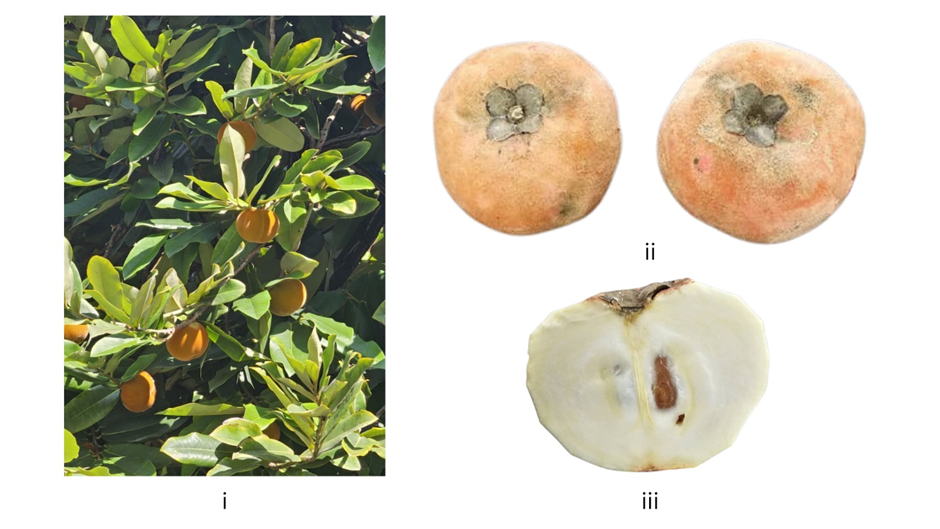
Figure 2: (i) Velvet apple tree with green leaves and orange-brown fruits, (ii) ripe velvet apples, and (iii) cross-section showing white flesh and central seed.
CONCLUSION
The velvet apple is a tropical gem that remains little known but is abundant in scientific, nutritional and economic value. With proper cultivation, it can enrich local biodiversity and offer communities a chance to enjoy a nutritious exotic fruit. For university students and the public, learning about this tree opens opportunities for further research in botany, nutrition and tropical agriculture.
RUJUKAN
1. Hung, S.F., Roan, S.F., Chang, T.L., King, H.B. & Chen, I.Z. (2016). Analysis of aroma compounds and nutrient contents of mabolo (Diospyros blancoi A. DC.), an ethnobotanical fruit of Austronesian Taiwan. Journal of Food and Drug Analysis, 24(1):83-89. https://doi.org/10.1016/j.jfda.2015.08.004.
2. Knapp, S. & Gibert, M.G. (2002). Proposal to conserve the name Diospyros discolor against Cavanillea philippensis (Ebenaceae). Taxon, 51:579e80.
3. Nahar, L., Ahmed, M. N., Alfi Afroze, C., Sangthong, S., Guo, M., & Sarker, S. D. (2025). Phytometabolites, Pharmacological Effects, Ethnomedicinal Properties, and Bioeconomic Potential of Velvet Apple (Diospyros discolor Willd.): A Review. Chemistry & biodiversity, 22(5), e202402168. https://doi.org/10.1002/cbdv.202402168
4. Rana, Z.H., Khairul Alam, M., Mahmud, M.S., Akhtaruzzaman, M. & Islam, S.N. (2026).
5. Assessment of variability in nutritional, antioxidant, and enzymatic inhibitory properties of edible wild fruits, velvet apple (Diospyros discolor Willd.) and may-nuh (Meyna spinosa Roxb. Ex.). Food and Humanity, 6, 100977. https://doi.org/10.1016/j.foohum.2025.100977.
Prepared by : Dr. Nur Akmal Ishak
Unit Biologi, Pusat Asasi Sains Pertanian (ASPutra)
Date of Input: 16/07/2026 | Updated: 16/07/2026 | emma
MEDIA SHARING