Have you ever come across labels such as phyto-collagen, vegan collagen, or plant collagen on skincare products? These terms have become increasingly popular among consumers seeking plant-based alternatives. Yet behind these scientifically sounding labels lies an important question: do plants actually produce collagen?
Scientifically, the answer is No.
This answer may surprise some consumers because the term phyto-collagen often creates the impression that collagen can be obtained directly from plants.
Collagen is the primary structural protein in animals, particularly vertebrates, and a key component of the extracellular matrix, providing tensile strength and elasticity to tissues such as skin, tendons, ligaments, and cartilage [1]. Collagen is defined by its characteristic triple helix structure, formed by three polypeptide chains arranged in a repeating Gly–X–Y motif, where X and Y are commonly proline or hydroxyproline [2]. This architecture determines the mechanical properties and biological function of collagen in connective tissues.
Collagen synthesis in the human body involves complex genetic and enzymatic processes: transcription of collagen genes, translation into pro-collagen chains, post-translational modifications such as hydroxylation (requiring vitamin C), and assembly into mature fibrils within the extracellular matrix [3]. These processes occur in specialized cells such as fibroblasts and are tightly regulated by gene expression.
Importantly, collagen genes are found only in animal genomes. Plants do not possess these genes [1].
This difference reflects how plants and animals evolved distinct solutions to the same structural challenge. Animals require flexible tissues that support movement, whereas plants need rigid structures capable of maintaining shape and resisting environmental stress. As a result, animals evolved collagen-rich extracellular matrices, while plants rely on cellulose-rich cell walls [4].
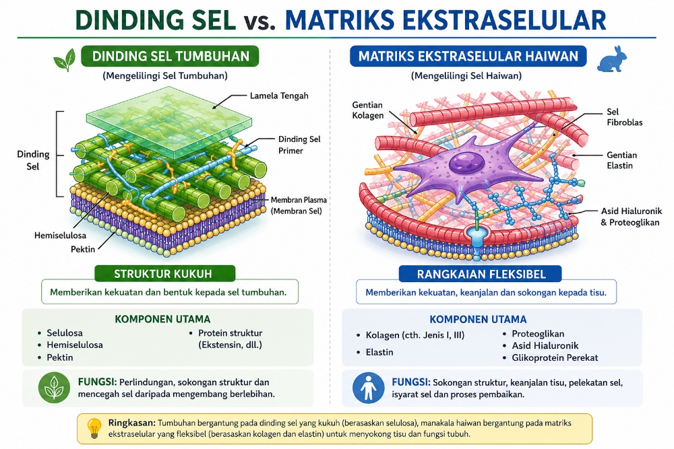
From a biological standpoint, therefore, plants do not produce true collagen.
What, then, does “phyto-collagen” mean in commercial products? This is where much of the confusion arises. In most cases, phyto-collagen does not refer to actual collagen molecules, but rather to plant-derived ingredients that support skin health or help the body's own collagen synthesis processes [5].
Certain plant compounds may support collagen stability by reducing oxidative stress or enhancing enzymatic activity [5]. However, this supportive role is fundamentally different from collagen biosynthesis itself.
The term “vegan collagen” would only be scientifically accurate if referring to recombinant collagen produced through biotechnology, such as genetically engineered microorganisms expressing animal collagen genes [3].
Within the human body, collagen is synthesized endogenously under genetic control [3]. Although hydrolyzed collagen peptides may influence connective tissue metabolism [6], the collagen deposited in tissues is produced through internal gene expression, not directly transferred from plant sources.
Does this mean phyto-collagen products are ineffective? Not necessarily. Many plant-derived compounds offer genuine benefits for skin health and overall well-being. However, these benefits should not obscure the biological fact that plants do not produce true collagen. Understanding the difference between "containing collagen" and "supporting collagen synthesis" enables consumers to make more informed, science-based decisions.
Phyto-collagen is not a myth, nor is it a deception. It is simply a term that is often misunderstood.
References:
[1] Deane CS, O’Connell K. Animal, plant, collagen and blended dietary proteins: Implications for skeletal muscle and bone health. Nutrients. 2020;12(13):3880.
[2] Selvaraj V, Rao A. Type I collagen: Synthesis, structure and physiological roles. Journal of Orthopaedic Research. 2024;42(6):1234–1247.
[3] Emam AN. Collagen and collagen-derived materials: Synthesis, structure, and biomedical applications. SN Applied Sciences. 2025;7:Article 07780.
[4] Yue C, Wang H, Zhang L. Self-assembly behaviour of collagen and its composites: Biological and mechanical perspectives. Polymers. 2024;10(10):642.
[5] Bondarenko L, Kalachinskaya M, Serhiichuk N, Motronenko V, Biloshytska O. Possibilities of plant preparations use for collagen structure and metabolism disturbances correction. Innovative Biosystems and Bioengineering. 2023;7(1):3–13.
[6] Sibilla S, Godfrey M, Brewer S, Budh-Raja A, Genovese L. An overview of the beneficial effects of hydrolysed collagen on skin properties. The Open Nutraceuticals Journal. 2015;8:29–42.
Date of Input: 24/06/2026 | Updated: 24/06/2026 | hasniah
MEDIA SHARING