GAMIFICATION IN BIOLOGY LEARNING: AN INNOVATION THAT BRINGS SCIENCE TO LIFE | CENTRE FOR FOUNDATION STUDIES IN SCIENCE OF UNIVERSITI PUTRA MALAYSIA
» ARTICLE » GAMIFICATION IN BIOLOGY LEARNING: AN INNOVATION THAT BRINGS SCIENCE TO LIFE

GAMIFICATION IN BIOLOGY LEARNING: AN INNOVATION THAT BRINGS SCIENCE TO LIFE

Biology is a challenging subject to teach due to its complexity, the need to balance theory and practice, and the wide range of topics covered from the molecular level to complete ecosystems. Students often come with preconceived notions that sometimes contradict scientific principles, partly due to confusion about the true meaning of “theory” in science. In addition, the lack of laboratory facilities and the difficulty of connecting classroom learning to real-world contexts further contribute to the challenges of teaching Biology. However, the use of innovative teaching approaches such as gamification can help enhance students’ understanding and make Biology learning more engaging and effective.


What is Gamification?

Gamification refers to the use of game elements and principles in non-game situations to make users more engaged, motivated, and enthusiastic. This approach transforms activities or systems to provide experiences and skills like those found in games. In the context of Biology education, gamification aims to increase students’ motivation, engagement, and enjoyment when learning complex topics such as the human body systems, ecology, or genetics.


Methods of Applying Gamification in Biology

The use of gamification in Biology learning has been gaining increasing attention in recent years. It is becoming a growing trend with great potential to improve students’ learning performance. Gamification in Biology helps students grasp complex concepts and retain knowledge while maintaining their interest.


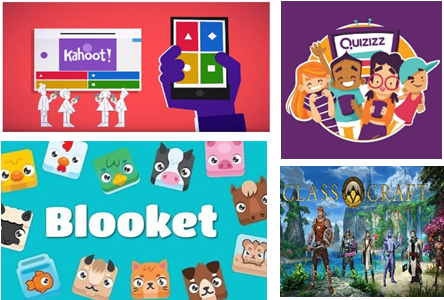
Applications of gamification in Biology encompass a variety of creative and interactive approaches. Popular examples include interactive digital games such as Kahoot!, Quizizz, Blooket and Classcraft, which allow students to answer Biology quizzes in a fun and competitive environment. Additionally, board and card games such as DNA cards, Biology crosswords and ecosystem simulations are used to stimulate critical thinking and promote problem-based learning. Simulation and role-play approaches have also proven effective, where students act as biological components such as cells, hormones, or ecological agents to better understand interactions and functions within biological systems.

Moreover, reward systems within digital learning platforms (Learning Management Systems, LMS) such as badges, points, or special achievements for completing tasks or quizzes correctly also contribute to increased motivation and active participation among students. These approaches not only make Biology learning more engaging and enjoyable but also help students build a deeper understanding through immersive, student-centered experiences.

Figure 1: Example of an interactive application, H5P and the badge system available in PutraBLAST.

Students’ and Teachers’ Acceptance

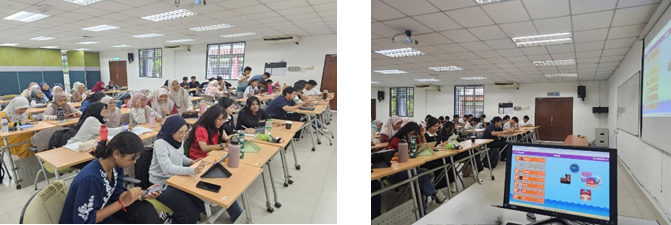
Students generally show great interest in gamification because it makes learning more enjoyable and less monotonous. They tend to remember Biology facts more easily when presented in the form of games. Meanwhile, teachers’ acceptance of gamification in Biology learning is also largely positive. However, there are still challenges in terms of time constraints, limited digital resources, and technical skills. Despite these issues, with adequate institutional support, professional training, and sound pedagogical planning, educators are increasingly open to adopting gamification as an innovation with the potential to enhance the effectiveness of Biology teaching and learning.


 Figure 2: Foundation students at UPM using gamification in Biology learning.

Conclusion

Gamification is not merely an entertainment tool but a powerful pedagogical strategy that can significantly enrich Biology learning. With thoughtful planning and creative implementation by educators, it has the potential to bring science to life in the classroom and to cultivate a generation of students who are more critical, collaborative, and motivated.


References

  1. Drace, K. (2013). Gamification of the laboratory experience to encourage student engagement. Journal of Microbiology & Biology Education, 14(2), 273–274. (https://doi.org/10.1128/jmbe.v14i2.632).
  2. Situmorang, R. P., Suwono, H., Munzil, Susanto, H., Chang, C.-Y., & Liu, S.-Y. (2024). Learn biology using digital game-based learning: A systematic literature review. Eurasia Journal of Mathematics, Science and Technology Education, 20(6), em2459. (https://doi.org/10.29333/ejmste/14658).
  3. Lantzouni, M., Poulopoulos, V., & Wallace, M. (2024). Gaming for the Education of Biology in High Schools. Encyclopedia, 4(2), 672–681. (https://doi.org/10.3390/encyclopedia4020041).
  4. Kalogiannakis, M., Papadakis, S., & Zourmpakis, A.-I. (2021). Gamification in Science Education: A Systematic Review of the Literature. Education Sciences, 11(1), 22. (https://doi.org/10.3390/educsci11010022).


Prepared by:

Dr. Nur Akmal Ishak
Biology Unit,
Foundation Centre for Agricultural Science, Universiti Putra Malaysia (ASPutra)
 

Date of Input: 24/11/2025 | Updated: 24/11/2025 | hasniah

MEDIA SHARING

CENTRE FOR FOUNDATION STUDIES IN SCIENCE OF UNIVERSITI PUTRA MALAYSIA
Universiti Putra Malaysia
43400 UPM Serdang
Selangor Darul Ehsan
0397696998
tiada
S, (08:45:26pm-08:50:26pm, 27 Feb 2026)   [*LIVETIMESTAMP*]