The "i-Barn" project represents a groundbreaking initiative aimed at modernizing farming practices through the integration of advanced technologies such as loT, sensors, and data analytics. By addressing critical agricultural challenges like cattle theft, farm security, and remote livestock monitoring, the "i-Barn" device seeks to provide farmers with innovative solutions that enhance the safety and efficiency of their operations. With its user-friendly interface and modular design, the device offers an accessible tool for real-time livestock monitoring and farm protection, allowing farmers to make informed decisions and effectively safeguard their assets. This article delves into the design, components, and potential applications of the "i-Barn" device, emphasizing its role in transforming farming methods and promoting sustainability.
The development of the "i-Barn" device was marked by meticulous attention to detail and collaborative effort. Despite challenges encountered during the construction of the prototype, effective problem-solving strategies led to the creation of a fully operational device, ready for comprehensive testing. The "i-Barn" device holds significant promise in enhancing farm security by incorporating features such as ultrasonic sensors to detect unauthorized access or disturbances. The active buzzer serves as an audible alarm system, alerting farmers to potential threats and prompting immediate action to protect livestock. Bluetooth connectivity ensures that farmers receive notifications, contributing to a safer working environment and protecting valuable assets.Additionally, the "i-Barn" device boasts a user-friendly interface, allowing farmers to customize settings and adjust parameters without requiring advanced technical knowledge. This adaptability makes it easier for farmers to tailor the system to their specific needs, such as setting the distance at which the sensor triggers an alert. The integration of modern technologies like loT and data analysis represents a significant advancement in farming practices, enabling real-time livestock monitoring and paving the way for future innovations.
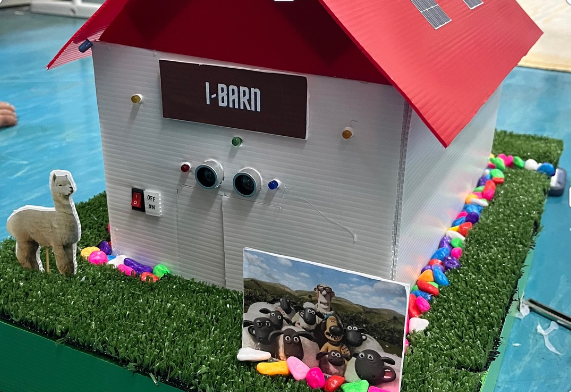
Programming the Arduino Uno is a crucial step, where the Arduino Integrated Development Environment (IDE) is used to compose the necessary code. Libraries are added to facilitate the use of the ultrasonic sensor and LED control functionalities. The program is designed to collect data from the ultrasonic sensor and regulate LED activation, followed by thorough testing to ensure the desired outcomes. Upon successful testing, the system is implemented in a real-world setting, with continuous monitoring and user feedback to identify areas for improvement. Regular performance monitoring and enhancements are essential to maintaining the system's functionality and reliability.
The "i-Barn" device offers substantial contributions to various stakeholders, including farmers, factory operators, and residents. For farmers, the device provides intrusion detection through ultrasonic sensors, alerting them to potential theft or unauthorized access. Factory operators benefit from a cost-effective solution for theft prevention, while residents can integrate ultrasonic sensors with home automation systems to enhance security measures.
In conclusion, the "i-Barn" device employs advanced security measures such as vibration sensors and real-time alerts to effectively reduce cattle theft, providing farmers with peace of mind and safeguarding their assets. The device also contributes to the overall well-being of livestock by ensuring safe breeding grounds and enabling remote monitoring, allowing farmers to intervene during emergencies and improve operational efficiency. Through innovation and collaboration, the "i-Barn" project aims to shape the future of agriculture, promoting sustainability and smarter farming practices.
Article by: Nurul Husna Binti Ahmad, Khairun Hazwani Binti Aminuddin, Nurul Afiqah Binti Mohd Nawawi, Aini Nadhirah Binti Shuhaimi, Che Ismahaiza Binti Che Norizan, Cik Aina Suhaiza Mohamad Nazir (Editor)
Date of Input: 09/07/2024 | Updated: 05/06/2025 | emma
MEDIA SHARING